
Where Are Fire Mist Systems Most Commonly Used in the UK?
Blogs
Blogs
For owners of large commercial premises, warehouses, and high-rise structures, understanding the operational mechanics of your fire suppression system provides reassurance and confirms proper compliance. A well-designed system provides a highly targeted response that limits damage and prevents a small incident from becoming a total loss event. The effectiveness of this system in an emergency is a testament to precision engineering and decades of fire safety science.
The activation of fire suppression systems is highly localised and starts with a single point of detection. This focused response is the reason why these systems are so efficient at preventing catastrophic loss. The heat from a fire is the sole trigger.
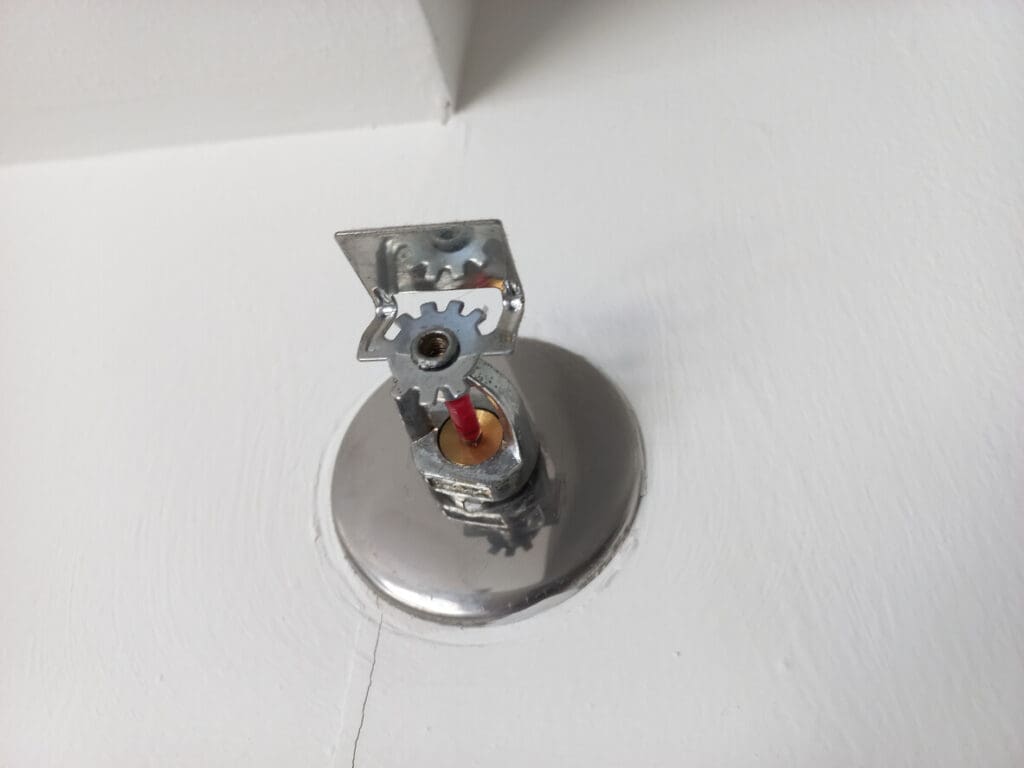
Each individual sprinkler head operates independently. Within the head is a heat-sensitive element: either a glass fluid-filled bulb or a fusible metal link.
This process confirms that water is only discharged precisely where the fire is happening.
The method by which water is stored and distributed throughout a building varies based on the size, hazard classification, and water supply available at the site.
For many commercial sprinkler systems, the simplest and fastest system is the wet pipe system. The pipework is constantly charged with pressurised water. Activation of a head results in near-instantaneous water discharge.
For buildings with inadequate water supply, or for large industrial sites with high flow requirements, a storage-based solution is needed. This involves a dedicated water storage tank on-site, sized to supply the required number of activated heads for the specified time. A pump is responsible for drawing water from the tank and increasing the pressure to the level needed for effective fire control across the commercial sprinklers network.
Not all commercial sprinklers use the same pipework setup. The environment and the nature of the assets being protected dictate the system type installed. Selecting the correct system is a critical part of the initial design phase.
When the fire and rescue service arrives, the presence of operational commercial sprinkler systems has already drastically improved the situation. The system acts as a first responder, buying precious time for firefighters.
The system communicates with the fire service in two ways:
With this, firefighters can focus on isolating the fire and evacuating occupants, knowing that the spread is already under control.
The efficiency of commercial sprinkler systems stems from their fundamentally simple mechanics, which have been refined over more than a century.
Several factors contribute to this proven reliability:
In a severe fire, the main threat to the building is the failure of the steel or concrete structure. Steel loses a significant percentage of its strength at high temperatures, leading to collapse.
Commercial sprinklers can prevent this structural failure by:
Commercial sprinklers maintain the physical structure of the building allowing for far quicker and less expensive restoration work.
While the purpose of commercial sprinkler systems is life safety, their financial value is measured in the drastic reduction of business interruption and property damage.
The difference in financial recovery between a sprinkler-protected building and an unprotected one is stark. In unprotected buildings, fires often require thousands of litres of water from fire brigade hoses, causing widespread flooding and extensive smoke damage, leading to weeks or months of operational downtime.
With commercial sprinklers:
This speed of recovery makes commercial sprinklers an integral asset management strategy.
The successful operation of commercial sprinklers in an emergency is entirely dependent on the quality of the design and installation. It is a complex engineering discipline guided by British Standards.
If you are planning a large-scale commercial project and require expert guidance on system design, contact our specialist team today for a detailed consultation.
Your ultimate resource for expert insights, industry trends, and practical tips on Residential & Commercial Fire Sprinklers.


Get in touch today to protect your property with a professionally installed fire sprinkler system. Our expert team is here to answer your questions and provide a tailored quote.