Where Are Fire Mist Systems Most Commonly Used in the UK?
Blogs
Blogs
Fire suppression is a required part of asset protection and public safety. Expansive commercial structures, including warehouses and high-rise offices, require specialised solutions that go beyond standard residential setups. A properly designed and installed commercial fire sprinkler system acts as the active defence layer in your building’s safety strategy.
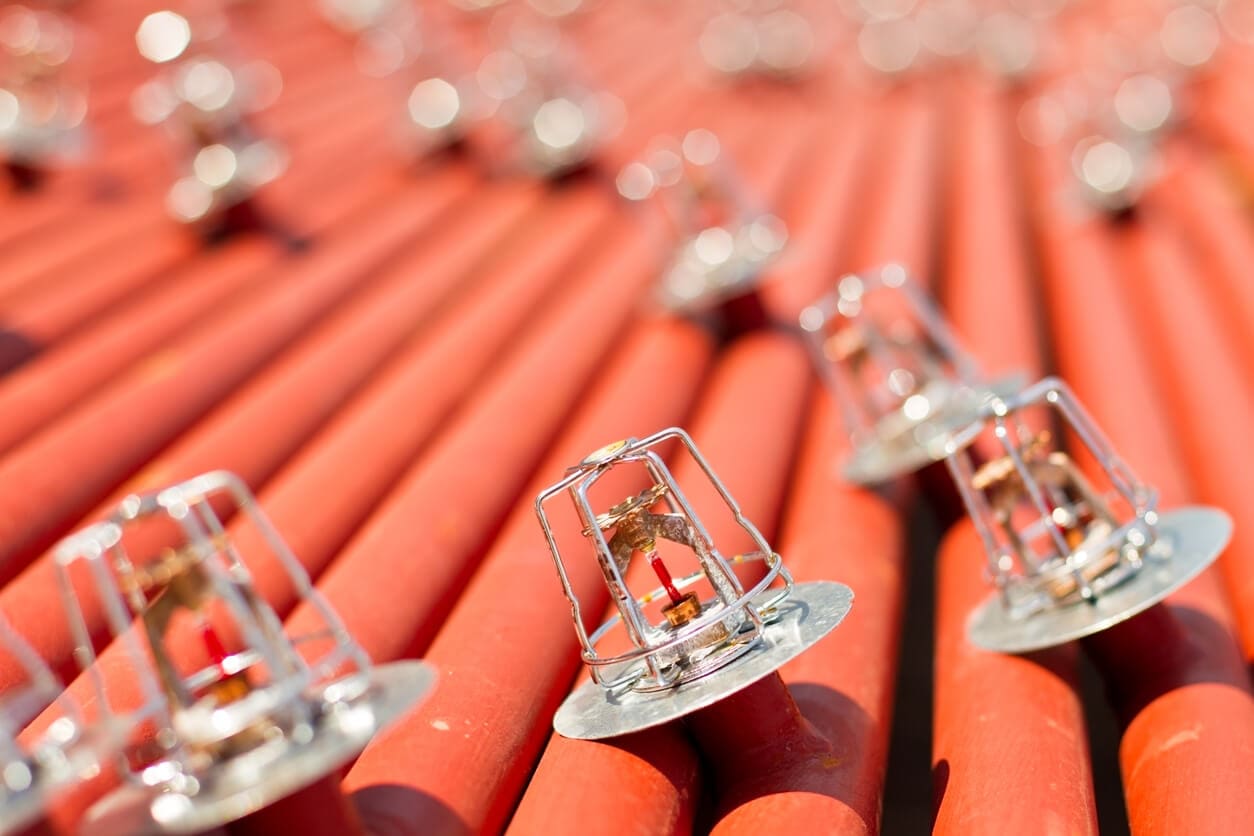
Unlike what many people assume, fire suppression systems do not activate all at once. Current commercial fire sprinkler systems are built on targeted activation. Each sprinkler head is a separate, independent unit containing a heat-sensitive element, usually a glass bulb filled with a fluid, or a fusible link.
A fire starts, and the heat naturally rises. Once the air temperature surrounding the specific sprinkler head reaches its designated activation point (generally 57°C to 74°C), the fluid inside the glass bulb expands and shatters the glass, or the metal link melts. This releases the water, allowing it to flow directly onto the fire.
That localised response minimises water damage and gives building occupants the greatest possible time to evacuate safely. The immediate action prevents the fire from progressing to a stage where it could threaten structural integrity or spread to adjacent areas.
The water requirements for expansive buildings are vastly different from domestic setups due to the higher flow rates and prolonged discharge times needed to control a large-scale fire. Commercial fire sprinkler systems rely on several methods to secure this required water source.
If the flow rate and pressure provided by the main are insufficient for the system’s design requirements, alternative solutions must be used. One common approach involves a fire pump, a dedicated component used to draw water from the supply and increase the pressure to the exact level required. These pumps are usually powered equipped with backup power to confirm continuous service during any emergency. Additionally, storage tanks are often necessary for industrial properties or those in areas with inadequate municipal water pressure. They hold a calculated volume of reserve water that feeds the system for the required duration, generally an hour or more, as specified by British Standards and building codes.
The height and layout of new commercial spaces present unique challenges for fire suppression. The system must be designed to throw water a greater distance while maintaining sufficient pressure and density to reach the burning fuel source.
Expert commercial fire sprinkler systems design addresses this through:
Office blocks and multi-story corporate buildings usually feature complex layouts with dense occupancy. Here, the system must prioritise both fire control and minimal visual intrusion. Commercial fire sprinkler systems in these settings usually use two main types:
Larger retail and shopping centres often feature vast, open concourses alongside multiple individual retail units, each with different fire loads and ceiling configurations.
Zoning a commercial fire sprinkler system brings several advantages. It allows for targeted activation, meaning if a fire occurs in a single retail unit, only the sprinklers covering that zone will activate, thereby isolating the incident and mitigating risk without affecting the entire shopping centre.
Each area can be sized independently to ensure the required flow rate is met by the available water supply, which is critical for preventing system failure due to excessive demand. It also means individual areas can be isolated for repairs without needing to shut down the system in the entire building.
The approach confirms the system remains highly responsive and precisely controlled across an expansive, multi-use floor plan.
The largest cost after a fire is not necessarily the physical damage, but the period of interruption when the business cannot operate. Installing certified commercial fire sprinkler systems dramatically mitigates this risk in several ways:
When selecting an installer, the contractor’s credentials are the primary measure of quality assurance. The design, installation, and commissioning of commercial fire sprinkler systems must be managed by certified specialists.
RAD Fire Sprinklers holds key accreditations from bodies like FIRAS and the IFC, confirming that we operate to the highest industry benchmarks for fire safety installation.
Choosing a commercial fire sprinkler system is a major decision, but selecting an accredited partner is the only way to safeguard that decision.
To discuss your specific contact our specialist team and request a detailed project consultation.
Your ultimate resource for expert insights, industry trends, and practical tips on Residential & Commercial Fire Sprinklers.

Get in touch today to protect your property with a professionally installed fire sprinkler system. Our expert team is here to answer your questions and provide a tailored quote.