Does Adding a Mezzanine Mean Your Commercial Sprinkler Design Must Change?
Blogs
Blogs
Modular housing moves much of the construction process into a factory environment. That can improve repeatability, but it also means the project team needs to coordinate building services before module production fixes the available space.
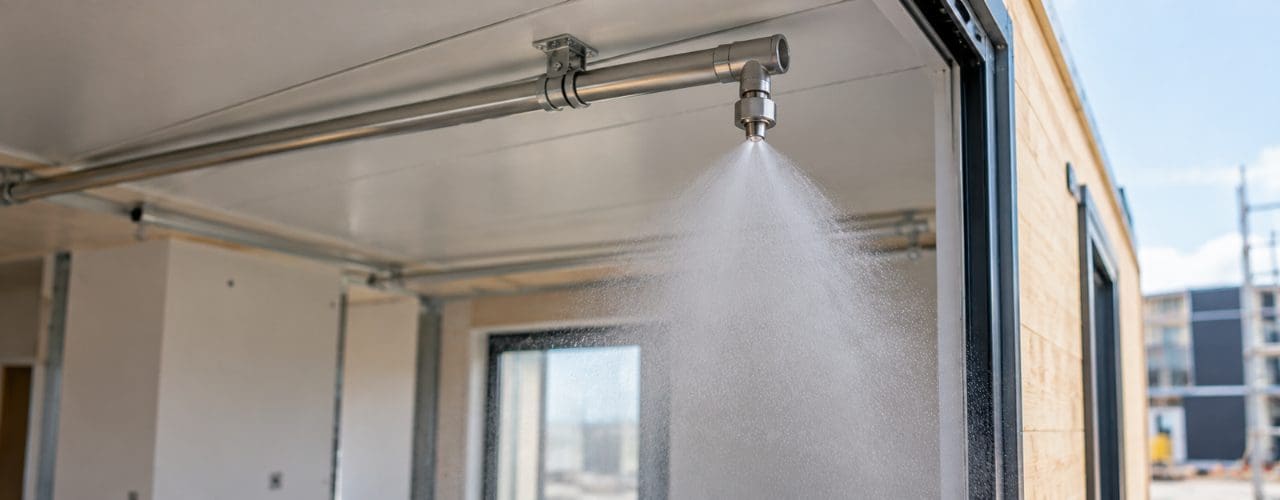
A Water Misting System should enter the design process before room layouts, service zones and module junctions become fixed. The mist designer needs enough information to understand the intended application, water supply, nozzle arrangement and pipe routes. The modular team then needs to carry that information through manufacture, transport, assembly and commissioning.
RAD Fire Sprinklers can review proposed layouts and water-supply information during design, then coordinate mist protection with the wider project. This helps developers and modular manufacturers understand the fire-protection requirements before repeated modules enter production.
Traditional site construction can leave some room for contractors to resolve service clashes as work progresses. Modular construction often reduces that flexibility because walls, ceilings and services may leave the factory largely complete.
A pipe route that conflicts with a structural member or module connection can therefore affect more than one room. If the same module repeats across a development, one unresolved detail can carry through many units.
A Water Misting System also needs to work within the final assembled building, not only inside the module before it leaves the factory. Junctions between units, concealed voids and site-completed connections all form part of the finished arrangement.
The mist design should therefore connect factory information with the completed-building fire strategy.
The designer needs coordinated drawings that show room layouts and ceiling construction. Service zones and module junction details also matter because they influence pipe routes and nozzle positions.
The project team should provide the intended building use, relevant fire-strategy information and available water-supply data. It should also confirm which elements the factory will complete and which connections the site team will make after delivery.
This information allows the water misting system designer to define practical routes before repeated production begins.
If the development uses several standard module types, identify each variation. Accessible units, corner modules or different ceiling arrangements may need separate coordination.
Pipework may need to pass across module boundaries after units reach site. The design should define where those connections occur and how installers will access them.
If pipework crosses fire-resisting construction, the project also needs suitable penetration and fire-stopping details. The factory and site teams should agree who installs each section and who completes the final connections.
Clear responsibility can prevent missing work at a junction because each contractor assumed another team would complete it.
The same principle applies to isolation points and controls. Their final position should remain accessible after modules are assembled and finishes are complete.
Water mist performance depends on the tested application and nozzle arrangement.
The factory team should not move nozzles simply to avoid a light fitting or ventilation terminal. A change in position can affect the conditions supported by the system’s fire-test evidence.
Ceiling layouts should therefore show lighting, ventilation and other fixed fittings. If the module manufacturer changes a bulkhead or introduces taller fitted furniture, the mist designer should review the change before production continues.
A water misting system needs an application-specific design. Current water mist guidance includes BS EN 14972-1:2020+A1:2025 for design, installation, inspection and maintenance, with separate fire-test protocols for specific applications.
The proposed system still needs a verified water supply.
Some high-pressure mist arrangements can use less water than conventional sprinkler systems. That can help where plant space or stored-water capacity is restricted, but the designer still needs verified pressure and flow information.
Some projects may need dedicated equipment. Testing the supply early gives the developer better information for plant-space planning and allows the manufacturer to reserve suitable access before the internal module layout is frozen.
RAD can assess mains pressure and flow and develop the water misting system around the actual project requirements. The team can also advise on pump and stored-water requirements where the design needs them.
Offsite installation does not remove the need for checks after modules reach site.
Transport and lifting can affect services, while site teams may still need to complete pipe connections between modules. The commissioning plan should state what the factory checks before dispatch and what the specialist verifies after assembly.
Records should follow the modules through the process. The completed building team needs final information that matches the assembled installation, not only the original factory drawings.
If a site connection cannot follow the coordinated design, the installer should return the issue to the designer before altering the arrangement. This protects the technical basis of the system and keeps the final records accurate.
Serviceable equipment needs practical access after occupation.
The facilities team may need access to controls, pumps or stored-water equipment. Designers should avoid placing these components where routine servicing would require unnecessary removal of fitted joinery.
A good handover should include current drawings, operating information and maintenance requirements for the installed Water Misting System.
RAD can support testing, commissioning and planned servicing after installation. Considering those requirements during design can make the completed system easier for the building owner to manage.
Bring the mist specialist into the project before the manufacturer freezes module layouts and service zones.
The designer does not need every construction detail at concept stage, but there should be enough information to assess the likely water supply, equipment space and pipe routes. As the module design develops, the fire-protection information can develop with it.
This gives the manufacturer a coordinated basis for repeated production and can reduce avoidable alterations at the factory or on site.
Modular construction depends on repeatable information, so the project needs a clear process for approving changes that affect the mist design.
If the manufacturer changes a ceiling build-up or moves a penetration, send the change back to the mist specialist for review. Apply the same process where site conditions force a connection detail to change after delivery.
This helps prevent informal alterations from repeating across several modules and gives the principal contractor a more reliable record for handover.
No. Suitability depends on the building use, layout, water supply and fire-test evidence for the selected system. A Water Misting System still needs an application-specific assessment, even where repeated modules simplify coordination.
Some projects may allow substantial offsite installation. The split between factory and site work depends on the module construction, transport constraints and the final design.
Check that site connections follow the design and that later work has not obstructed nozzles or restricted maintenance access. Complete the required testing and commissioning before handover.
Planning a modular or offsite-manufactured housing development? Bring RAD Fire Sprinklers into the design process before module layouts and service zones are fixed. We can assess the proposed high-pressure water mist system, review the available water supply and coordinate pipework, nozzle positions and commissioning requirements with the wider build programme. Get in touch with our team to discuss the project and establish the fire protection requirements before production begins.
Your ultimate resource for expert insights, industry trends, and practical tips on Residential & Commercial Fire Sprinklers.


Get in touch today to protect your property with a professionally installed fire sprinkler system. Our expert team is here to answer your questions and provide a tailored quote.